Code Switching In South East Nigeria And Intercultural Communication: Identity, Power And Linguistic Negotiation
About the topic
This topic examines the role of language in shaping social life in multilingual societies, with a particular focus on South East Nigeria. In this context, Igbo–English code-switching extends beyond basic communication, especially among young people. Rather than being a casual or incidental practice, It is deeply embedded in historical, cultural, and global influences. Code-switching functions as a social practice through which individuals express identity, signal group affiliation, and navigate power relations in everyday interactions. In a sociolinguistic environment where English dominates formal domains such as education and professional settings, while Igbo remains central to cultural identity, language alternation carries significant meaning. This study positions code-switching as a key feature of intercultural communication, illustrating how individuals negotiate multiple linguistic and cultural realities.
The Paper
This paper examines the role language in shaping social life within multilingual societies, with a particular focus on South East Nigeria . In this, context, Igbo -English code-switching extends beyond basic communication, especially among young people. Rather than being a casual or incidental practice, it is deeply embedded in historical , cultural and global influences .Code-switching functions as a social practice through which individuals express identity, signal group affiliation and navigate power relations in everyday interactions. In a sociolinguistic environment where English dominates formal domains such as education and professional settings, while Igbo remains central identity, language alternation carries significant meaning. This study positions code switching as a key feature of intercultural communication, illustrating how individuals negotiate multiple linguistic and cultural realities.
Relevant implications
This paper explores how young people in South East of Nigeria use Igbo- English code-switching as a strategic and context -sensitive communicative practice across various settings, including informal social spaces, educational institutions workplace, and digital platforms. Drawing on theoretical frameworks such as Social Identity Theory, Communication Accommodation Theory and Postcolonial perspectives, the study argues that code- switching is not arbitrary but intentional and meaningful. It enables individuals to assert identity, establish social positioning, and navigate power dynamics. While English is often associated with professionalism, authority and social mobility, the use of Igbo reinforces cultural belonging and community ties. The paper demonstrates that Code- switching serves as both an expression of agency and a reflection of broader linguistic inequalities.
Click the link to learn more
Biography & Interests
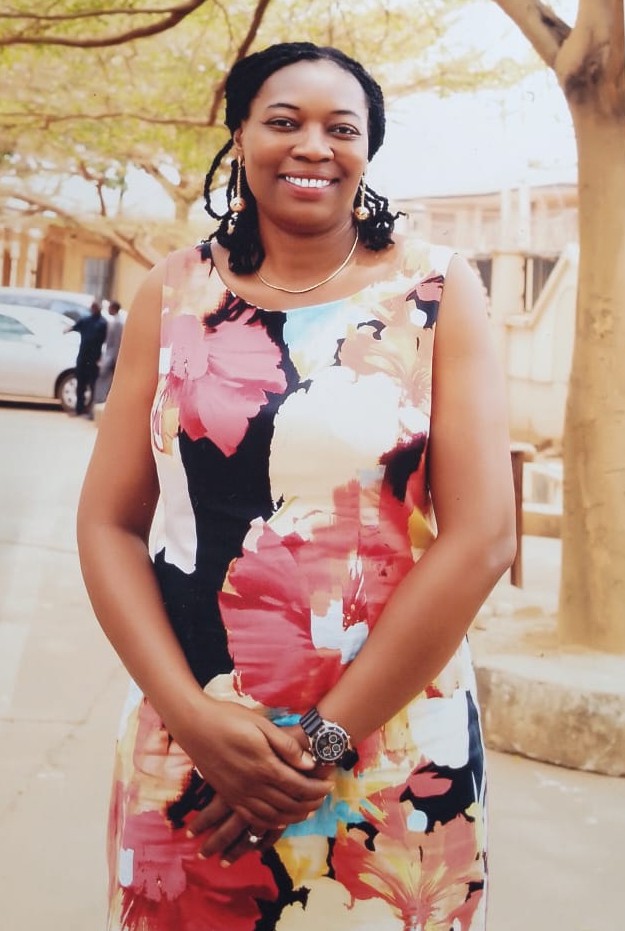
Buno Sumtia Okoro
Buno Sumtia Okoro, an award-winning media producer and communication development specialist, is an international student from Nigeria. She was born on February 18, 1976, in Lagos State, Nigeria. Buno established a strong academic foundation at the University of Nigeria, Nsukka, where she earned a Bachelor’s degree in Education Administration, a Master’s degree in Community Development, and a Postgraduate Diploma in Mass Communication. Buno has distinguished herself in the field of broadcast production. She received an award from BBC Media Action as the best producer for her impactful program on HIV/AIDS awareness. She has also received a commendation for bringing energy and relevance to Coal City Express, a popular live programme on Radio Nigeria Enugu. In addition, she has demonstrated outstanding expertise in documentary and feature production. During her time at Radio Nigeria, Enugu, she advanced to the position of Controller and Head of the Production Unit, where she championed programming designed to make a meaningful impact on society. Her primary motivation lies in using media as a tool for development and social change. In her leisure time, she enjoys reading, singing, travelling, engaging in sports, and shopping. She also has a strong passion for cultural harmony, which informed her of her decision to pursue a Master’s programme in Intercultural and International Communication Studies at Royal Roads University, Canada. Buno is happily married and continues to bring passion, creativity, and innovation to her professional and academic pursuits.