
English, Identity, and Nigerian Youth: Navigating Language in Everyday Life
About the topic
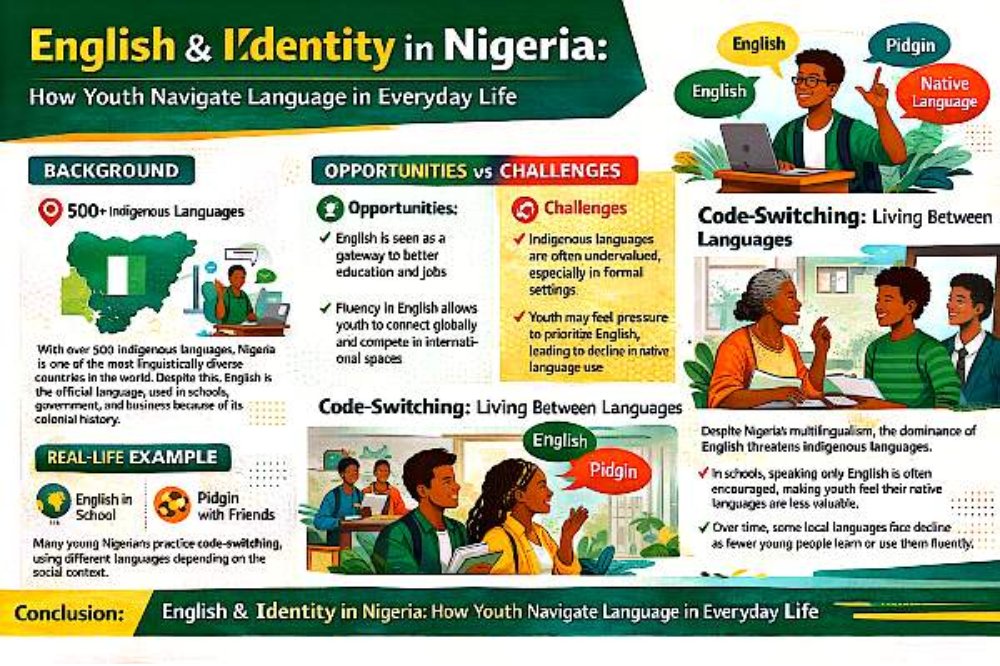
My topic explores how Nigerian youth navigate multiple languages, English, Nigerian Pidgin,
and indigenous languages, in their everyday lives, and how this shapes their sense of
identity. It focuses on the idea that language is not just a tool for communication, but a way
young people express who they are in different social and cultural contexts.
The Paper
The paper examines key issues such as multilingualism, code-switching, and the dominance
of English in formal settings like education and employment. It examines how young people
switch between languages depending on their environment, and how English is often
associated with status, success, and global opportunities, while indigenous languages are
more closely tied to culture, family, and heritage.
Relevant implications
The implications of this topic highlight the tension between global influence and local
identity. It shows how Nigerian youth constantly negotiate between preserving their cultural
roots and adapting to modern, global expectations. It also emphasizes the role of language
in shaping social perception, access to opportunities, and the importance of maintaining
indigenous languages for cultural continuity.
Click the link to learn more
Biography & Interests
Bolaji Afinni
I am from Lagos, Nigeria, and of Yoruba heritage. I have a background in accounting and
financial operations, with experience in managing transactions and reconciliations. I have
worked closely with senior financial officers, including the Head of Accounts and Chief
Financial Officer. I am currently pursuing Intercultural and International Communication at
Royal Roads University.
I am interested in business development, entrepreneurship, financial management, and
project management. I also enjoy exploring communication, culture, and how language
shapes identity in everyday life.